

What Thermal Cameras See That the Human Eye Can't: Drone Inspections Across Miami and South Florida
Most people have never seen the world through a thermal camera.
It doesn't show you colors the way your eyes do. It shows you heat — and heat tells a story that visible light simply can't. A story about where energy is escaping, where moisture is hiding, where a component is failing, and where a problem is developing before it becomes a disaster.
At SAIRS, we use thermal drone imaging across Miami and South Florida in three very different industries — and in each one, the camera reveals something that no human eye, and no standard drone camera, could ever catch.
Rooftops: Finding the Source of a Leak Before It Destroys a Ceiling
This is one of the most common requests we get in Miami — and one of the most valuable applications of thermal imaging.
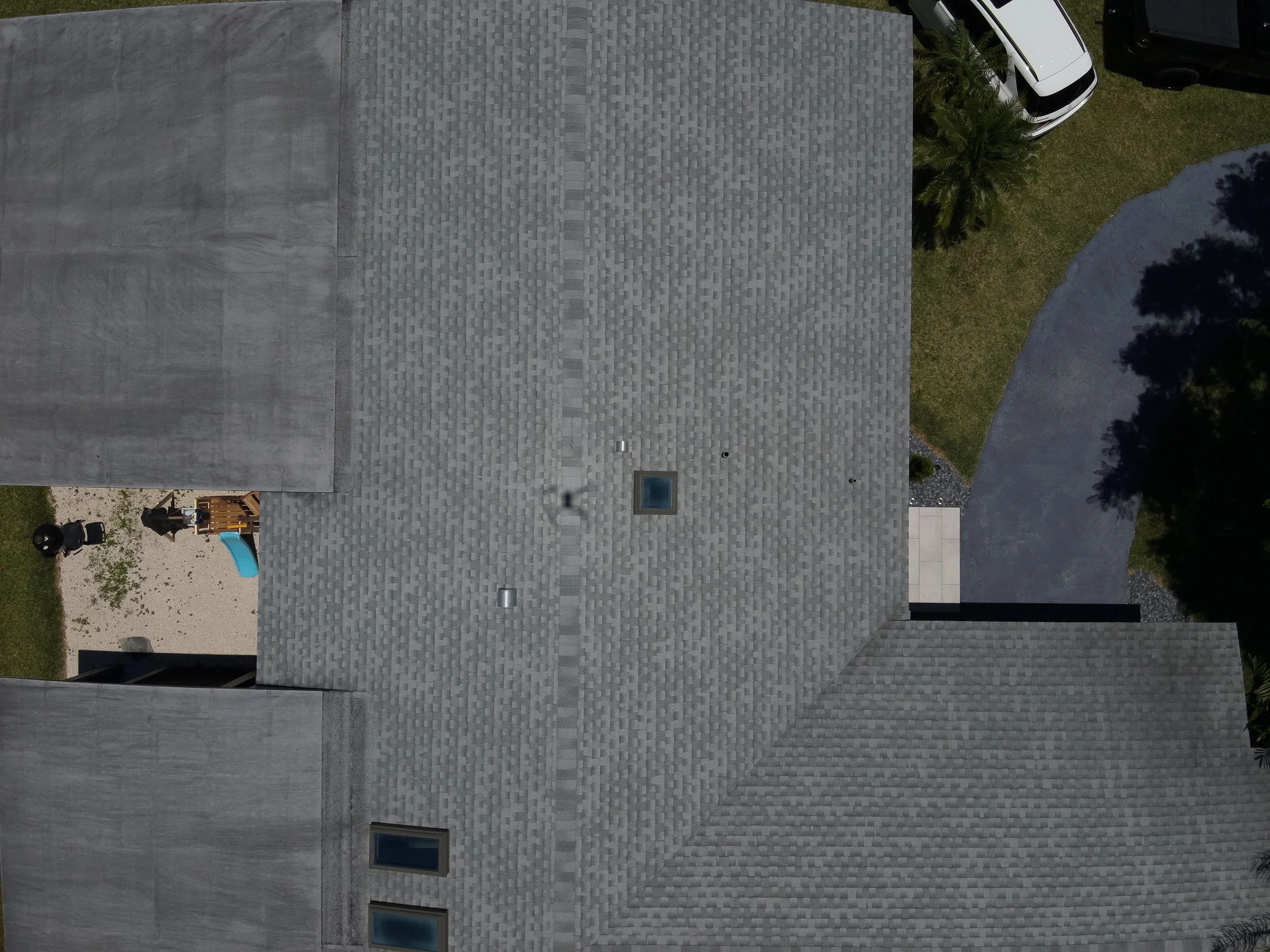
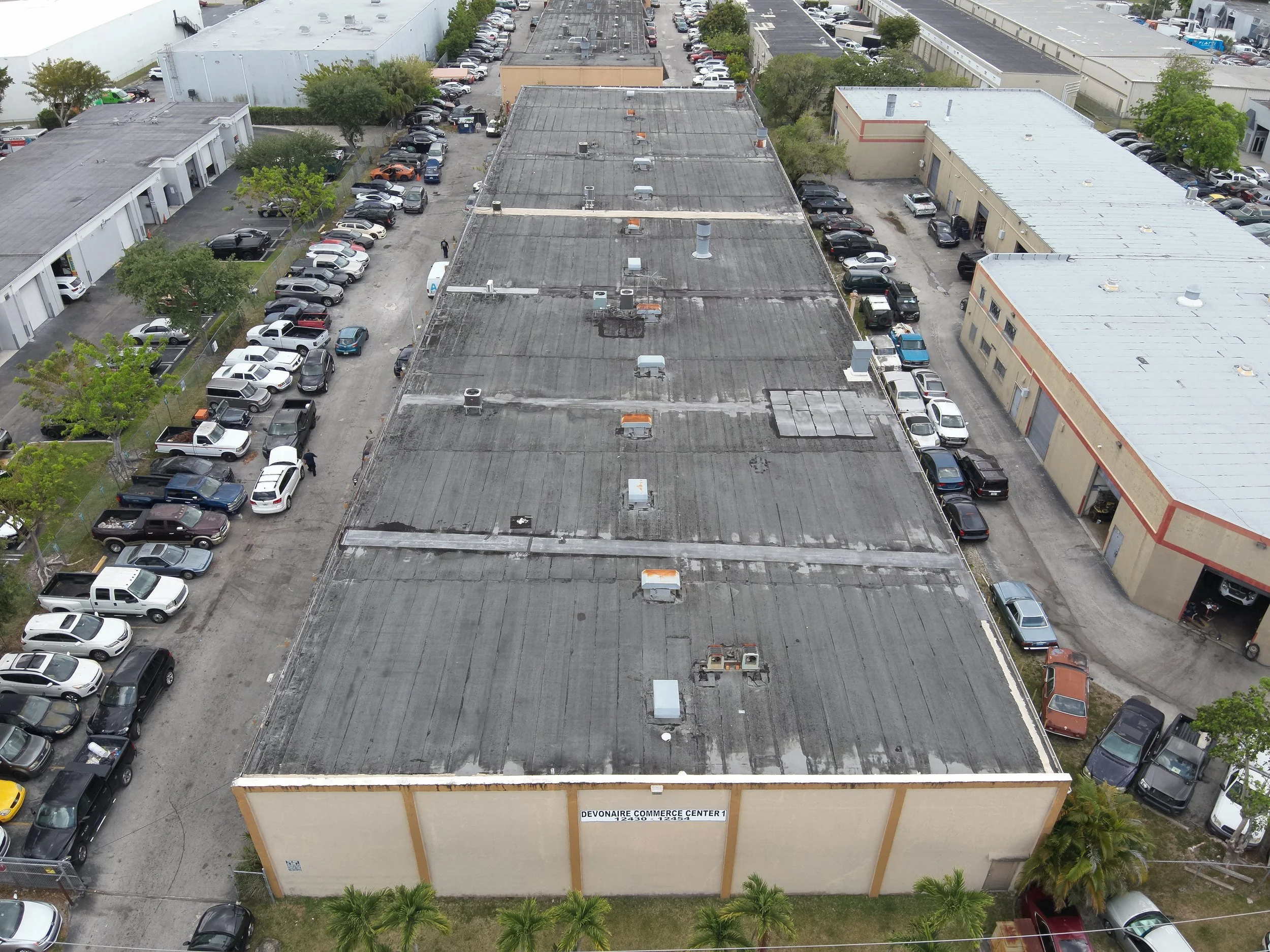
A roof can look completely normal from the outside. No visible damage, no obvious entry points, no signs of wear. But somewhere inside that roof system, water has found its way in. It sits there, trapped between layers, invisible to anyone looking from above or below — until it shows up as a stain on a ceiling, or worse, as structural damage that's been developing for months.
A thermal camera changes that entirely.
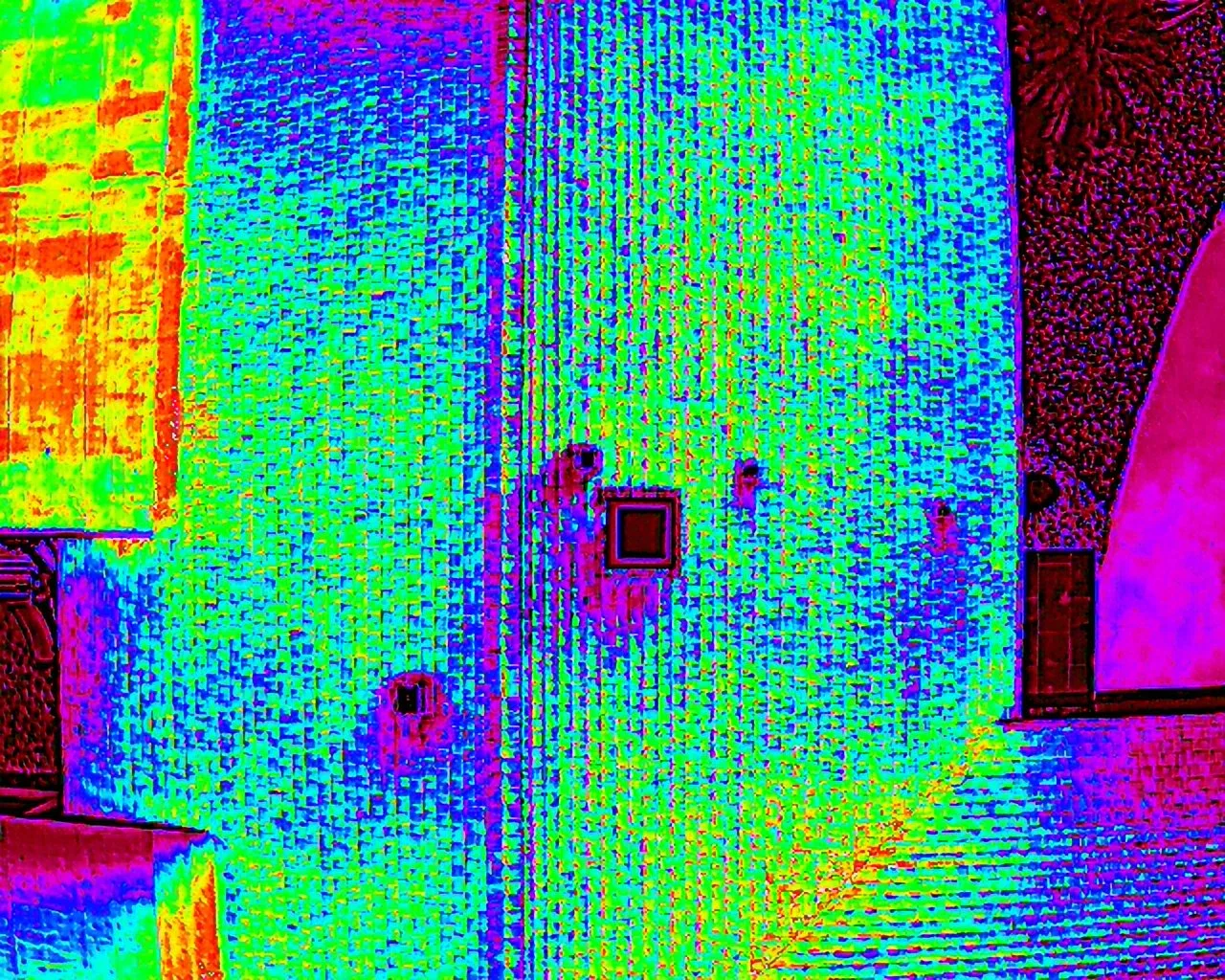
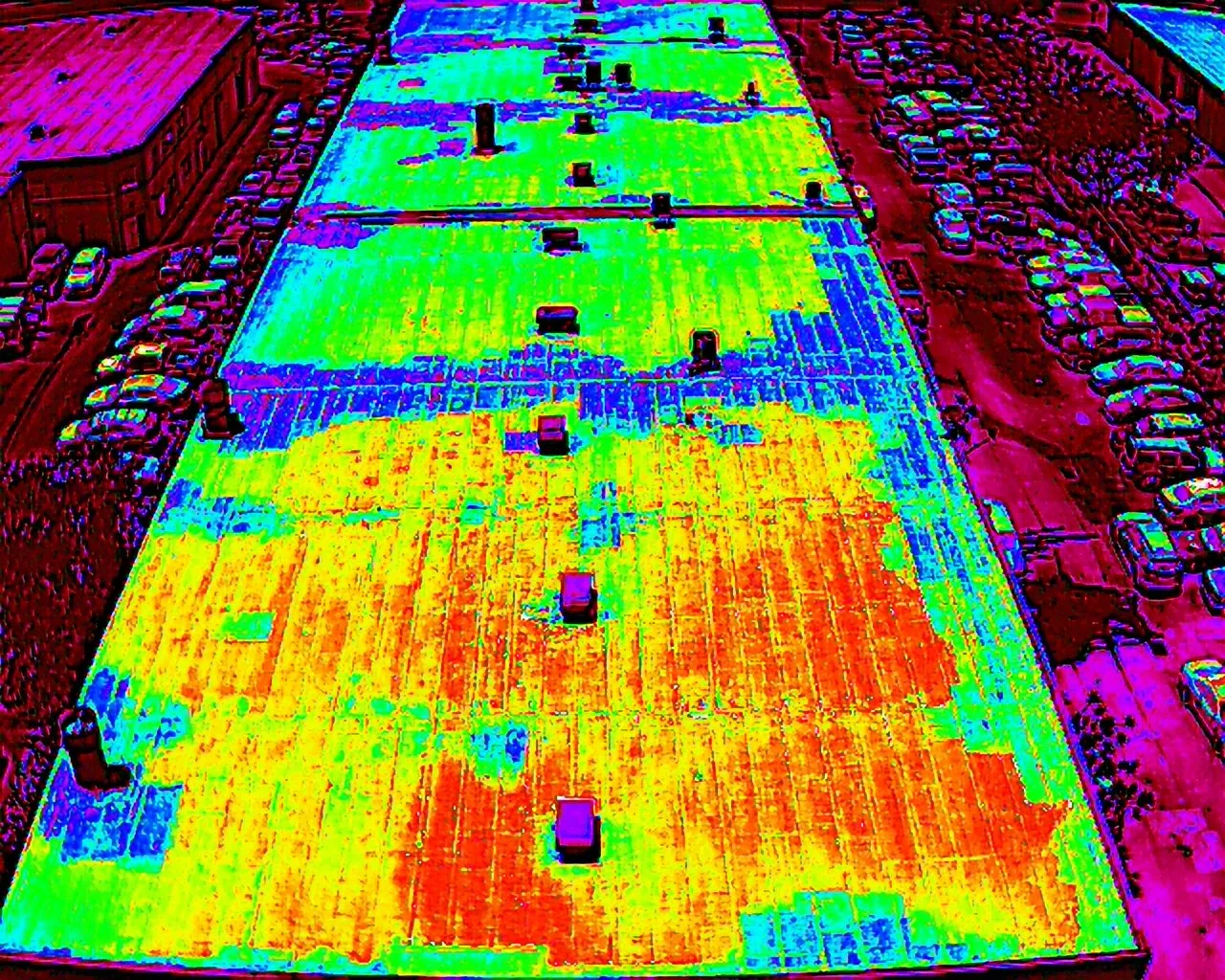
During the day, the sun heats the roof surface. Wet areas absorb more heat and retain it longer than dry areas. At the right time — typically just after sunset, when the dry areas cool faster — the thermal camera reveals exactly where that moisture is hiding. Not a general area. The precise location. The exact spot where a repair crew needs to go.
For property owners, contractors, and insurance adjusters across Miami-Dade and Broward, that kind of precision changes everything about how a roof inspection works.
Solar Panels: When a Panel Looks Fine But Isn't
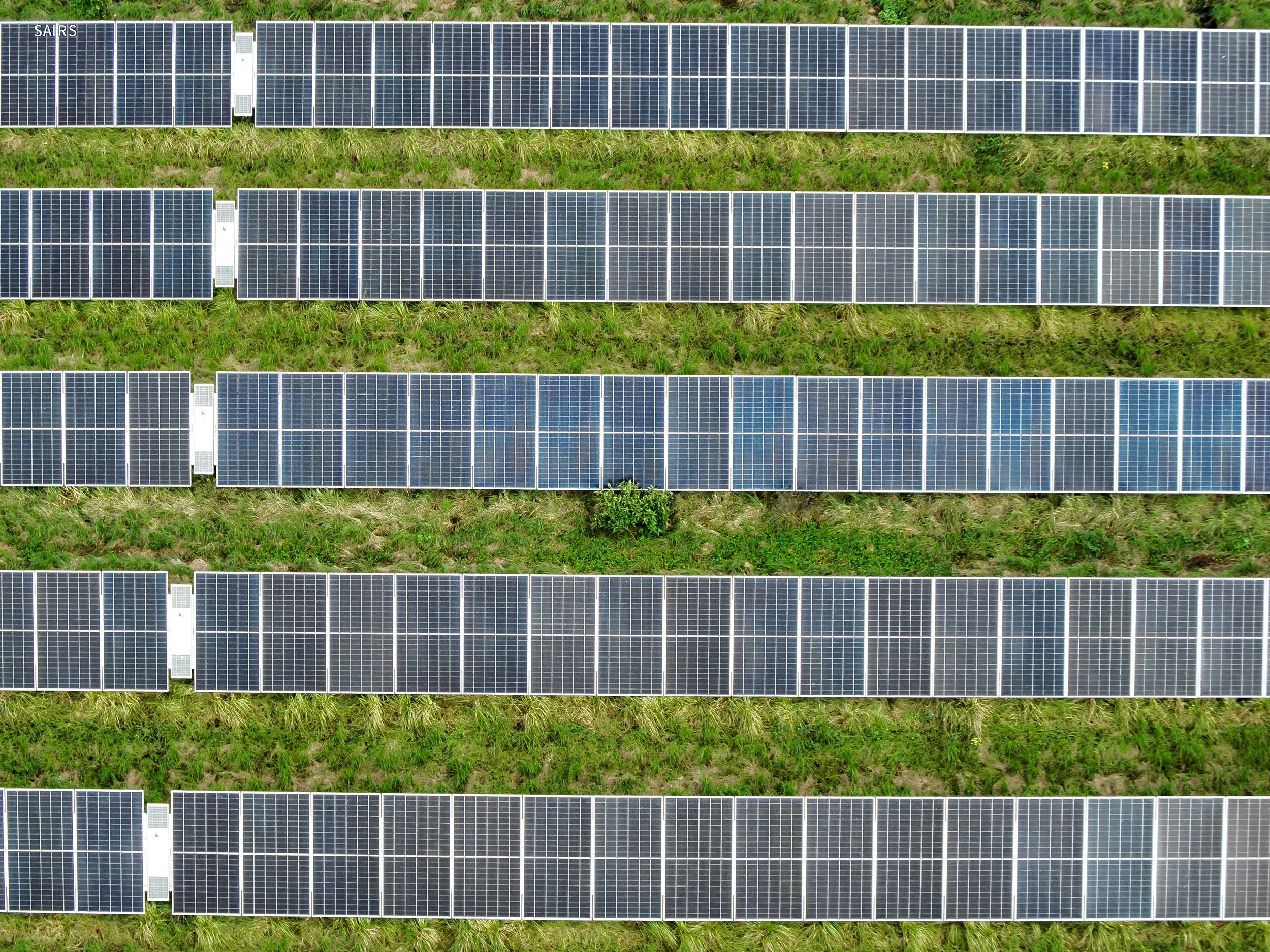
A solar panel that looks perfect to the naked eye can be generating almost nothing. And you'd never know it without a thermal camera.
The most common issues — hotspots, bypass diode failures, cell degradation, delamination — are completely invisible under normal light. The panel looks clean, the glass is intact, there's no physical damage. But underneath, something has failed, and that panel is either underperforming or contributing nothing to the system.
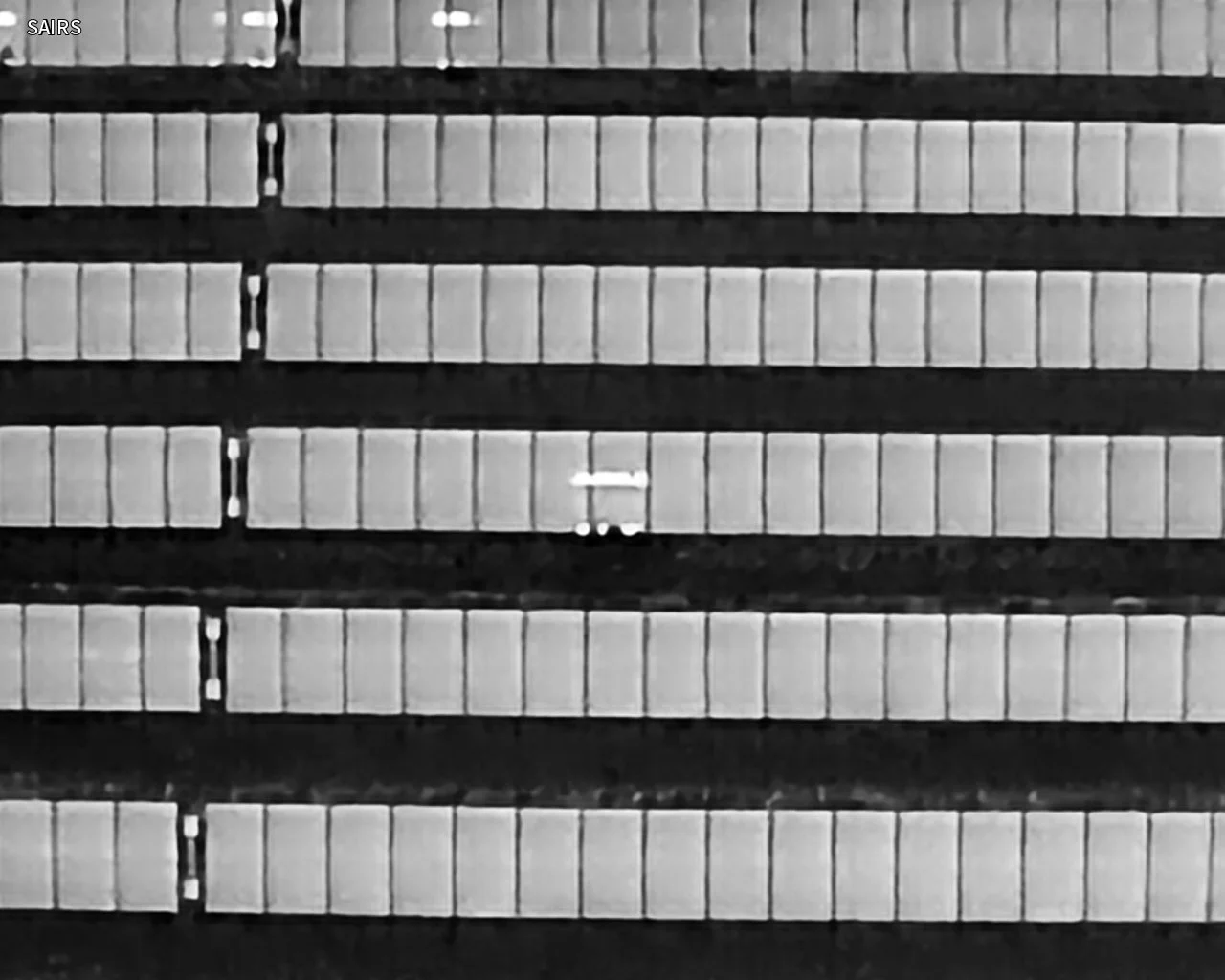
Thermal imaging shows it immediately. A healthy, functioning panel has a uniform heat signature. A panel with a hotspot shows a concentrated area of intense heat — bright against the rest of the array. A failed bypass diode shows a specific pattern of heat distribution that's immediately identifiable to a trained eye.
One drone flight over a solar installation in South Florida can document every panel in the array — identifying exactly which units have issues and precisely where on the panel the problem is located. The property owner gets a report with specific panel locations flagged, ready to hand to a maintenance crew.
Powerlines: 300 Poles Inspected in a Single Day
This is where thermal drone inspection becomes something truly remarkable — and where most people don't realize what's possible.
Electric utilities use thermal drones to inspect their transmission and distribution networks. And the scale of what's achievable in a single day changes how infrastructure maintenance works entirely.
Here's what a thermal powerline inspection actually looks like: the drone flies along the line, capturing thermal images of each pole, each transformer, each piece of hardware along the route. Every image is automatically tagged with the precise GPS coordinates of that pole — embedded directly in the metadata of the photo.
A healthy electrical component shows up white in the thermal image — hot, active, functioning. A damaged or failing component shows up black — cool, inactive, dead. The difference is immediately visible, and immediately actionable.
In a single day of drone operations, a crew can cover approximately 10 miles of powerline — around 300 poles inspected, documented, and GPS-tagged. When the report goes back to the utility company, they don't get a general area to investigate. They get exact coordinates. They can send a repair crew directly to pole number 247 on Route 12, swap the failing component, and move on.
That's a level of operational efficiency that ground crews simply cannot match.
One More Thing Worth Knowing: Thermal Palettes Are Not Universal
Different inspection types use different thermal color palettes — and this is something most clients don't know until we explain it.
For moisture detection in rooftops and energy loss in buildings, we use a color palette — typically iron or rainbow — where warmer areas show in reds and yellows and cooler areas in blues and purples. The contrast makes moisture pockets and thermal bridges immediately visible.
For electrical inspections — powerlines, substations, industrial equipment — we use black and white. White means heat, black means no heat. In an electrical context, that binary is exactly what you need to identify a failing component quickly and unambiguously.
The right palette isn't a preference. It's a professional standard — and it's part of what separates a proper thermal inspection from just flying a drone with a thermal sensor attached.

Thermals Palettes
What You Get at the End
Every thermal inspection by SAIRS delivers a complete set of radiometric images — images that don't just look thermal, but contain actual temperature data embedded in every pixel. The report is organized by inspection area, with flagged findings clearly identified and GPS-tagged where applicable.
Everything is delivered within 24 hours of the inspection. Whether it's a rooftop in Coral Gables, a solar installation in Broward, or 10 miles of distribution line in Palm Beach County — the turnaround is the same.
Want to Schedule a Thermal Inspection in Miami or South Florida?
Contact SAIRS at info@s-airs.com or call 786-809-8756. We serve Miami-Dade, Broward, Palm Beach County, and statewide.