

We've Inspected Cell Towers All Across Miami. Here's What We Actually Do Up There.
There's a moment on every cell tower inspection when you realize how much information is invisible from the ground.
You can stand at the base of a 200-foot structure in Miami-Dade and see the tower. But you can't see the condition of the antenna arrays at the top, the mounting hardware on the RAD, or whether there's corrosion developing on the cross members thirty feet up. For years, getting that information meant sending trained climbers up — a process that takes hours, introduces real safety risk, and still doesn't give you the comprehensive visual documentation that a drone can capture in a single session.
That's what we do at SAIRS.
The Types of Tower Structures We Inspect in South Florida
Not all cell towers look the same — and each structure presents its own inspection requirements. Across Miami-Dade, Broward, and Palm Beach County, we regularly work with four main configurations:
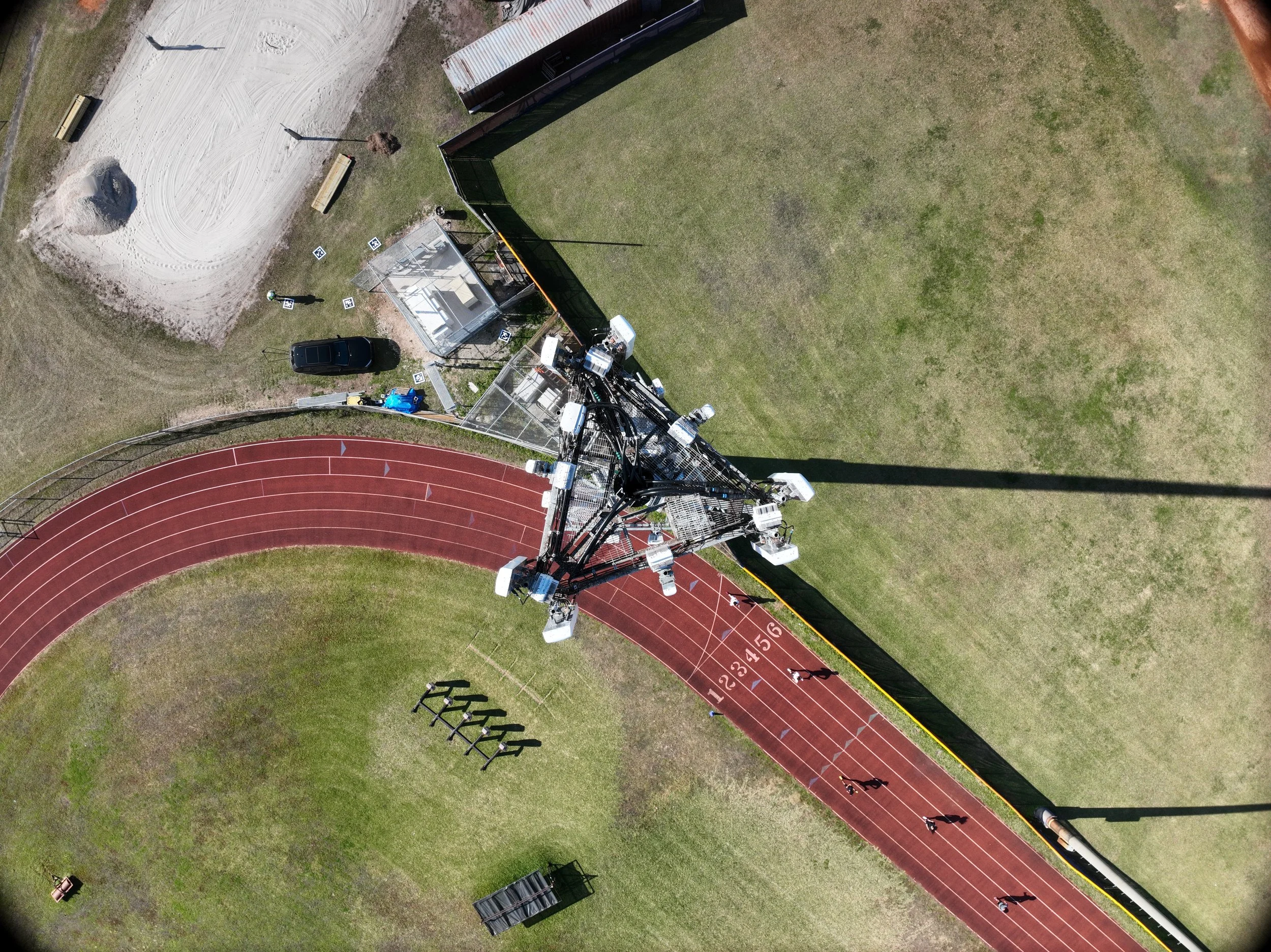
Monopole A single, tapered steel pole — the most common tower type in Miami's urban environment. Their compact footprint makes them frequent in residential neighborhoods, commercial corridors, and along major roads. Despite their relatively simple appearance, the antenna density at the top makes ground-level assessment nearly impossible without a drone.
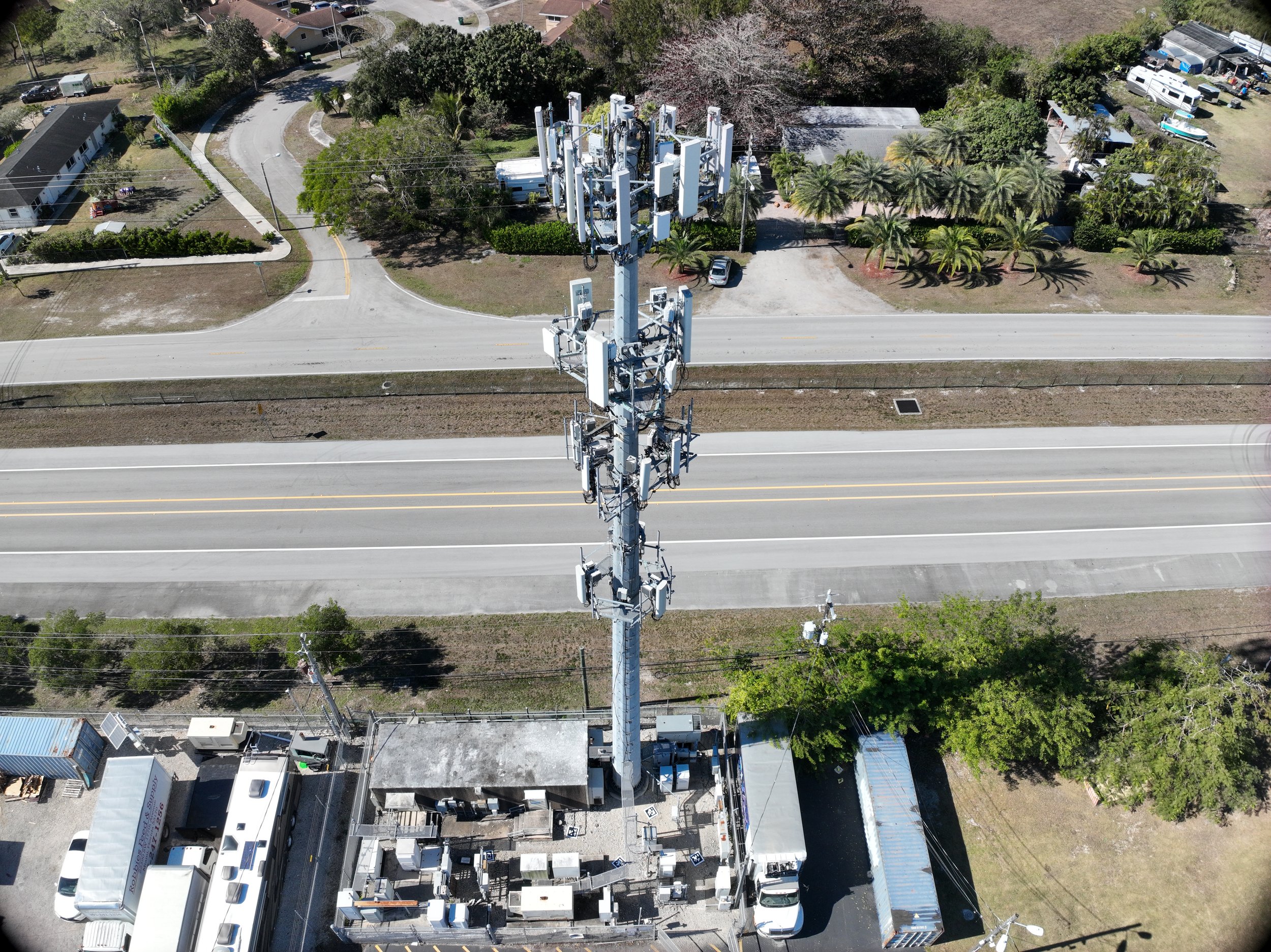
Monopole tower
Self-Support Tower Triangular or square lattice structures that can exceed 300 feet. These are the large freestanding towers you see along Florida highways and industrial zones. Multiple carriers often share a single structure, each with their own RAD at different heights — making drone inspections especially efficient since a single flight session covers all carriers.
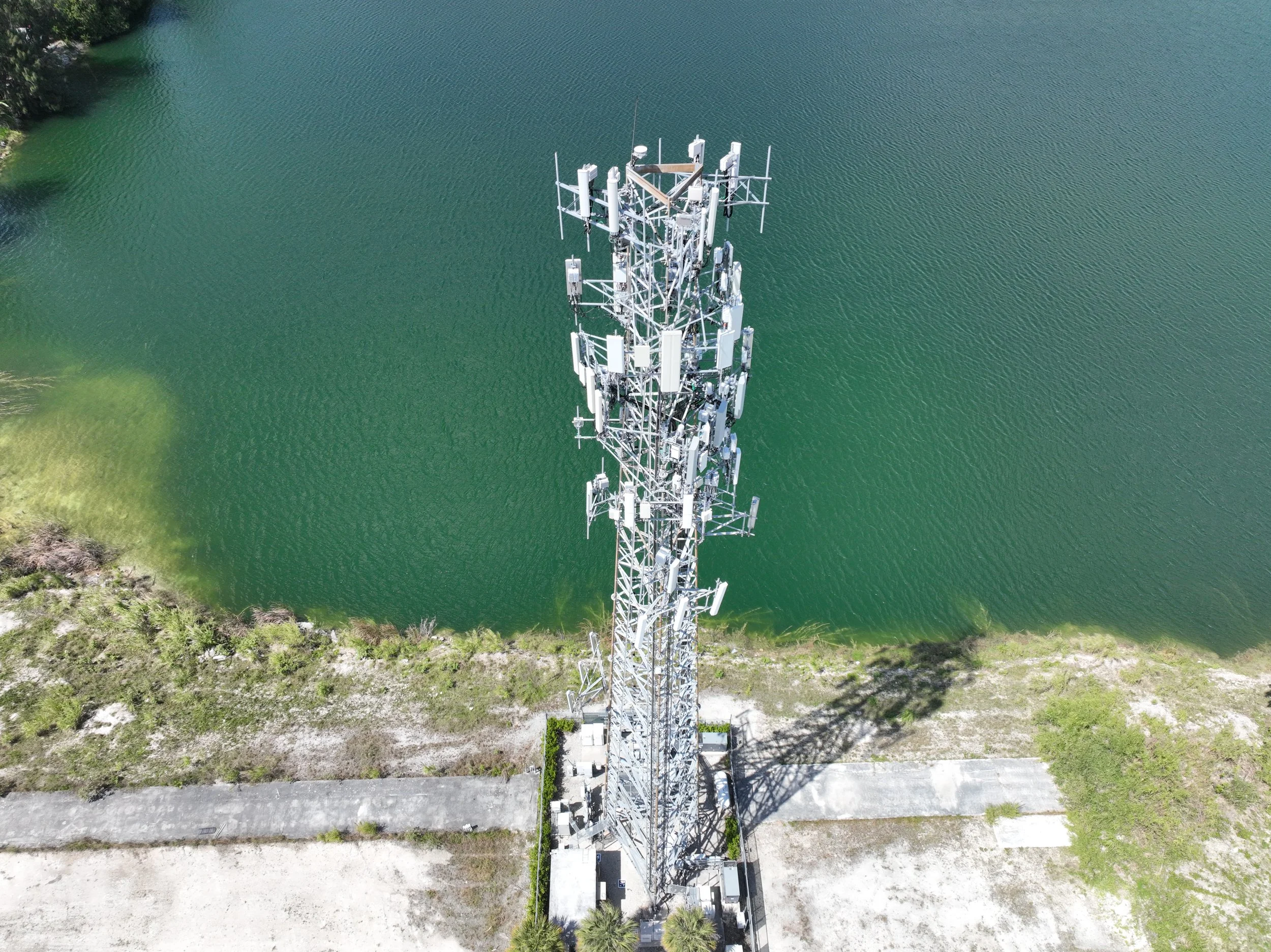
Self-support tower
Guyed Tower Tall, slender structures stabilized by wire cables anchored to the ground. Common in rural and semi-rural areas of South Florida. These require careful flight planning around the guy wires, but deliver excellent access to every part of the structure.
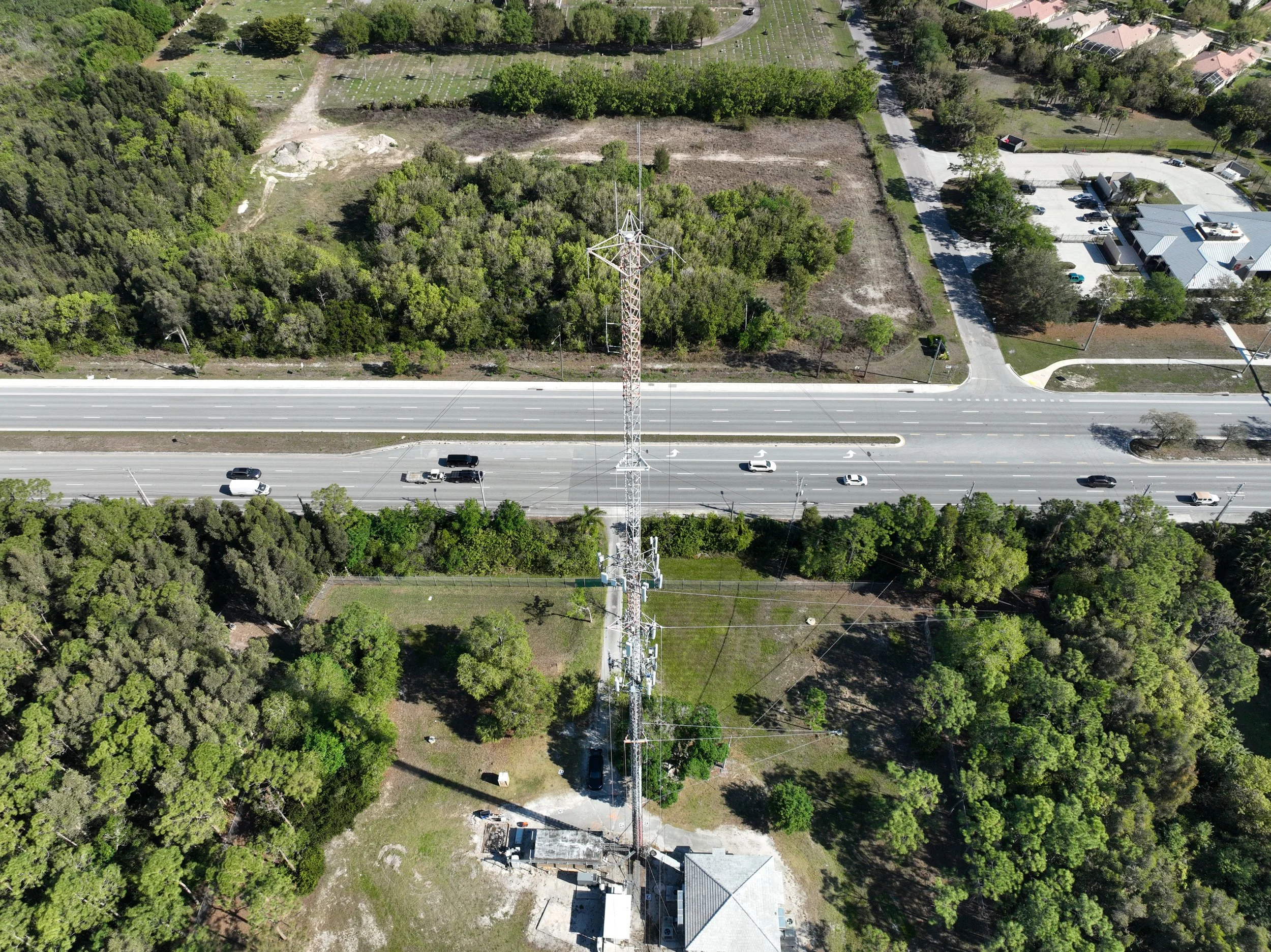
Guyed tower
Rooftop & Parking Structure Installations One of the most common antenna configurations in Miami. Carriers frequently install antenna arrays on the rooftops of office buildings, hotels, hospitals, and multi-level parking structures throughout the city. These require a different approach — lower altitude, tighter airspace, and close coordination with building management — but the inspection process is equally thorough.
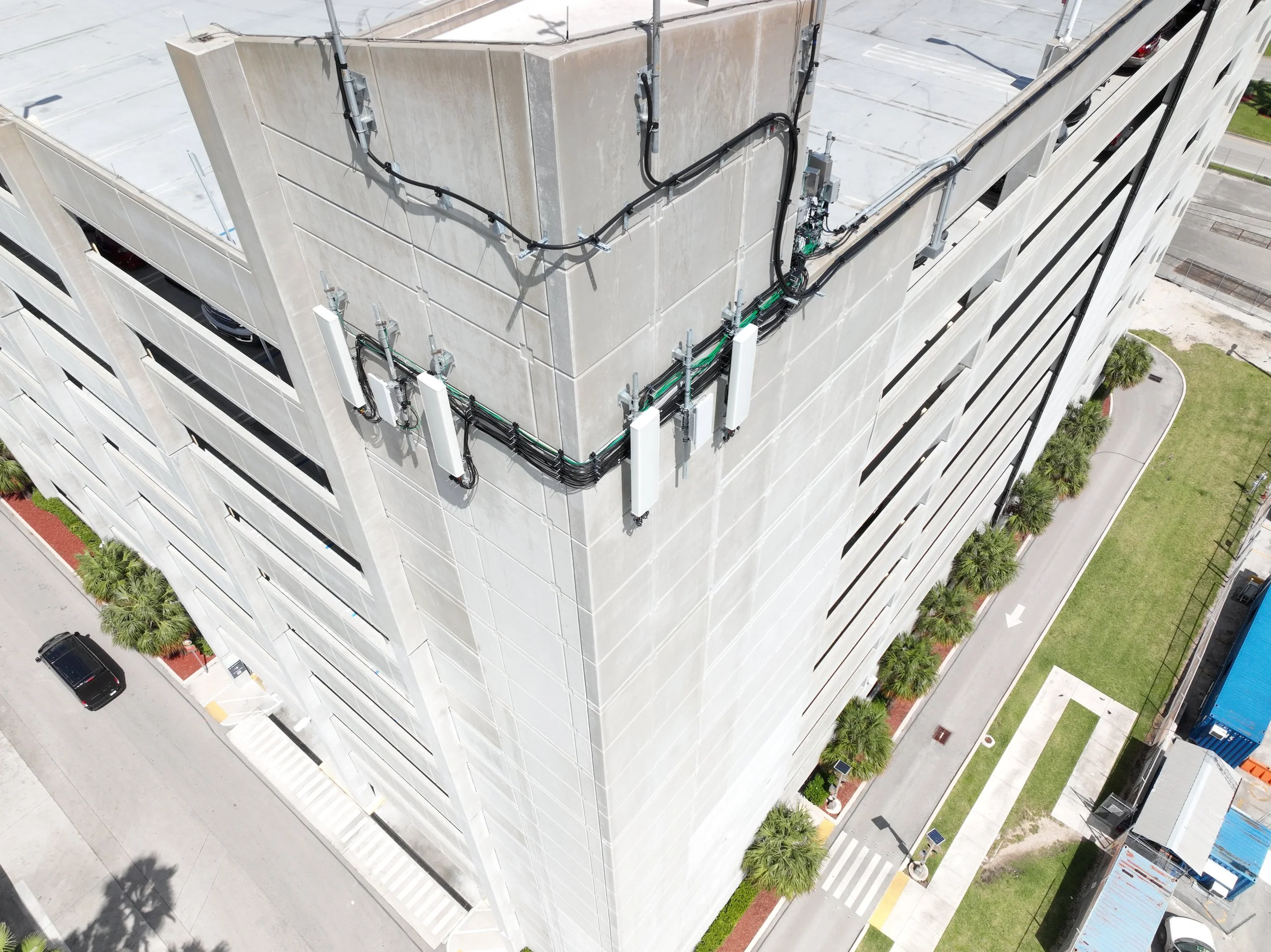
Rooftop antenna mounting
What a Cell Tower Inspection Actually Looks Like
A full drone inspection isn't a single flyover. It's a series of deliberate, structured flights — each designed to capture the RAD from a specific angle. For every carrier on the tower, we fly the following passes:
Center Shot A straight-on view of the antenna array from the front. This is the baseline image — it shows the full face of the RAD, the mounting hardware, and the general condition of the antennas and cables.
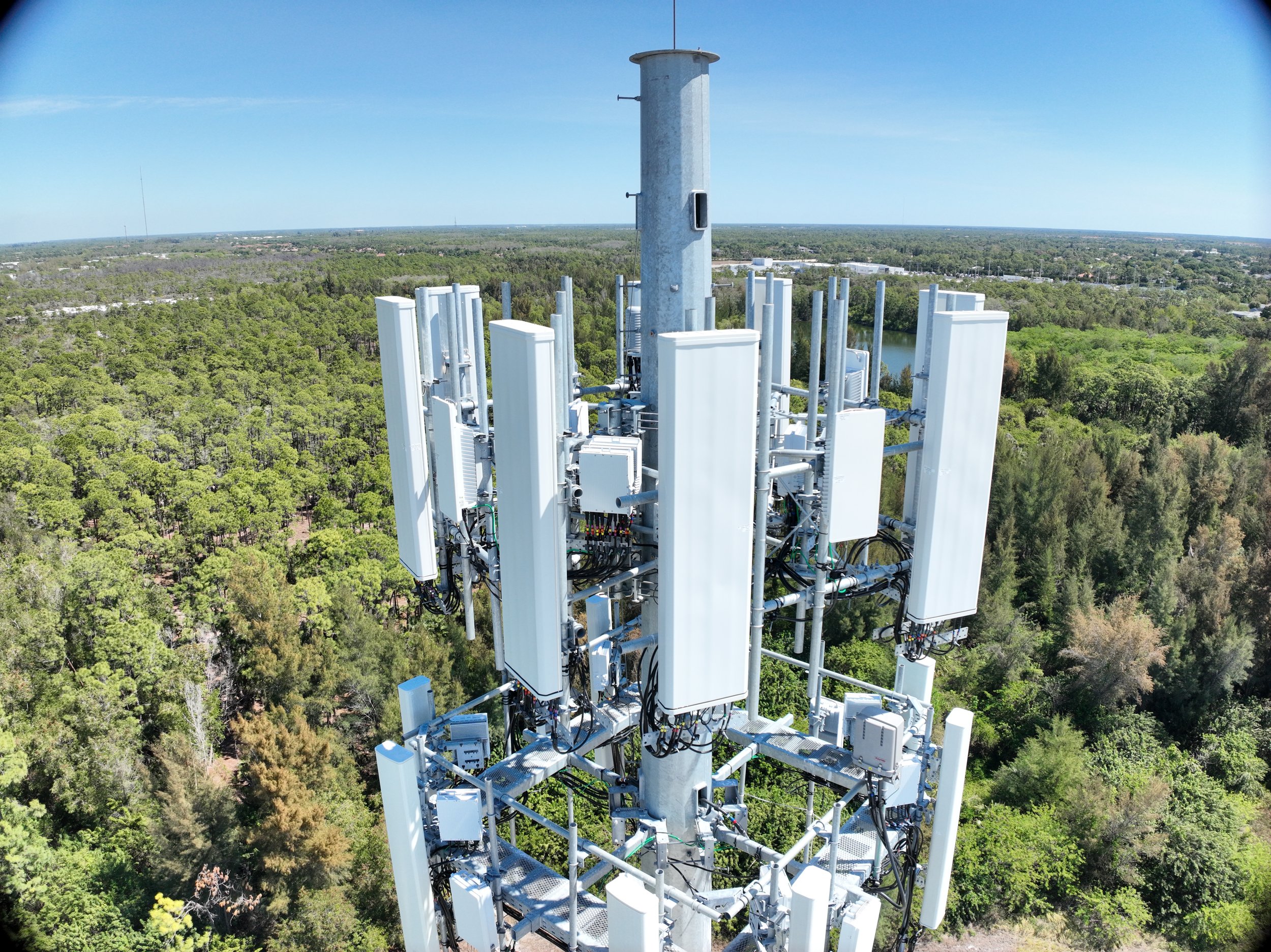
Center
Uplook The drone pulls back and angles upward, capturing the RAD from below. This view reveals the underside of the array, cable entry points, and any damage or wear that isn't visible from the front.
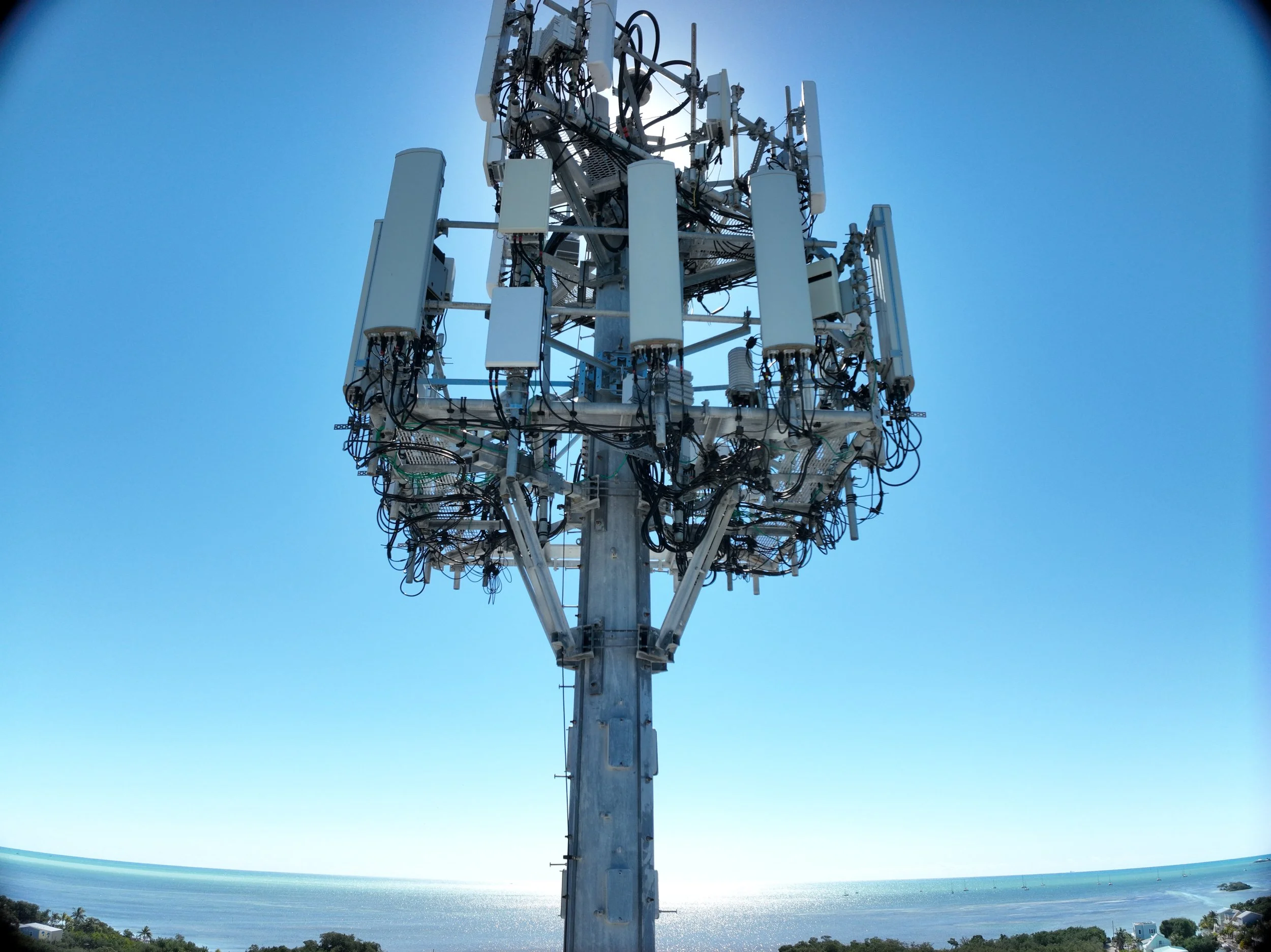
Uplook
Downlook The drone positions above the array and angles downward. This captures the top of the antennas, the mounting brackets, and any corrosion or physical damage on the upper surfaces.
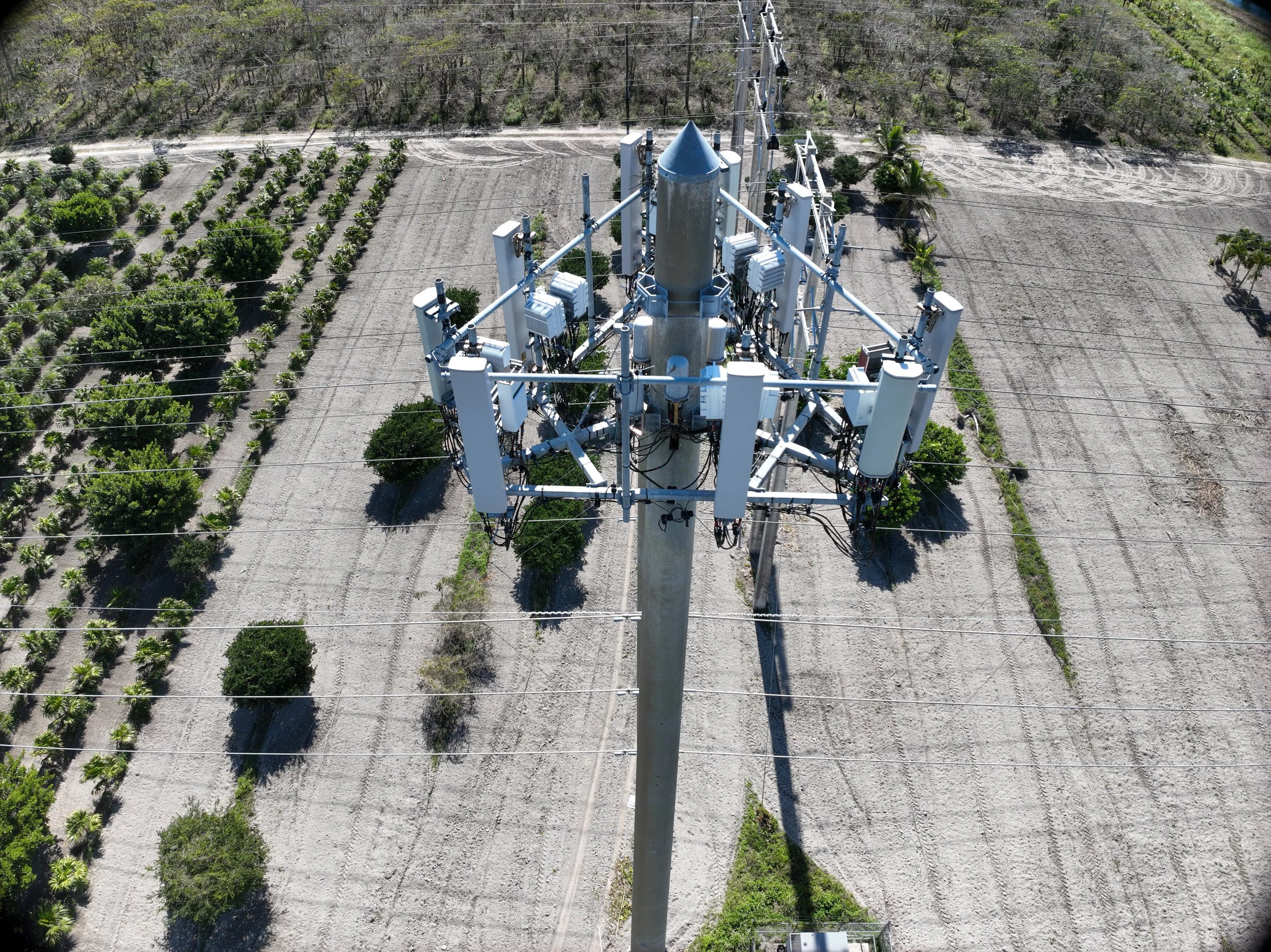
Downlook
Additional Passes Depending on the structure and carrier requirements, we capture close-up detail shots of specific hardware, cable connections, and any areas flagged during earlier passes. The DJI Mavic 3E's 56x zoom lets us get close enough to read serial numbers and identify component-level issues without moving the drone.
The result is a complete photogrammetric record of every RAD on the tower — every carrier, every angle, every component — all in high definition.
Beyond the Tower — The Shelter
The inspection doesn't end when the drone lands. Once the aerial portion is complete, we access the shelter — the equipment room at the base of the tower — and document every component inside. Power systems, cabinets, cable management, cooling equipment. The same standard of detail we apply in the air, we apply on the ground.
Delivered in Under 24 Hours
Everything — aerial imagery organized by carrier and RAD, shelter documentation, and the complete photogrammetric record — is delivered to the client within 24 hours of the inspection. No waiting days for a report. No follow-up calls asking where the files are.
Ready to Schedule a Tower Inspection in Miami?
SAIRS serves Miami-Dade, Broward, Palm Beach County, and statewide. Contact us at info@s-airs.com or call 786-809-8756.